In my last post, I talked about stress. Today, I wanted to write about what happens if we don’t address stress: burnout, a topic I’m very passionate about speaking on (both parental burnout and professional burnout).
So, what exactly is burnout and what causes it?
Burnout is mental, emotional, and physical exhaustion that is essentially caused by prolonged stress. There are 3 main symptoms of burnout:
Exhaustion: you feel drained on all levels; you have problems sleeping (less or more than usual), you’re getting sick often, you’re turning to drugs or alcohol to feel better.
Cynicism and Depersonalization: you’re checked out from work, you’re asking yourself “what’s the point?” a lot, you’re cynical in a way that is bleeding to other areas of your life.
Reduced efficacy: your performance is slipping, it’s taking longer and longer to get something done, you arrive late and leave early to work.
There are various factors that cause burnout, some are well-known (being overworked, high-pressure environment) but many of my clients are often surprised at some lesser known causes.
Lesser known causes of burnout include:
Doing work that is boring or unchallenging
Unclear expectations from your boss (or what to focus on next)
Lack of recognition for your work
No support system or social connections
Perfectionistic tendencies
Need for control; reluctance to delegate
Systemic discrimination and lack of support for marginalized identities: gender, race, caregiver status, class, disabilities, and more
The Difference Between Stress and Burnout
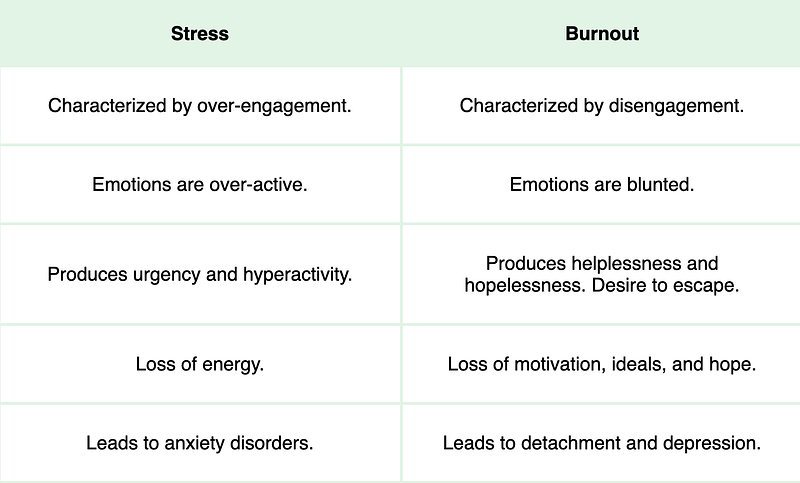
A common question is: am I just stressed out? Or am I really experiencing burnout? If stress is a sense of overwhelm and “too much” of something, burnout is a sense of depletion, running on fumes. The HelpGuide table below shows some of these differences.
Table demonstrating the difference between Stress and Burnout
4 Ways to Prevent and Address Burnout
Each tip below is through the lens of someone who is experiencing burnout. But if you’re a boss, my question to you is: are you also perpetuating burnout for your teams? Ask yourself how you’re supporting (or not supporting) your teams on each of these points.
Please commit to at least one of these actions below. Don’t let this be a nice read and then you forget about it. Translate this to action!
1. Be okay with “good enough”
One of the biggest predictors of burnout is the burden of perfectionism. This is a matter of prioritization. Is this thing I’m working on or doing have to be at a 100%? Or can it be 80% Can it be 50%? Not everything requires the same level of quality across your life.
EXERCISE: Replace “Perfect” with “Good Enough”. Create a “T” table, and brainstorm areas that stress you or the ROI of time that’s not serving you.
Table of What we think should be “perfect” and how to Replace with “Good Enough”
2. Create boundaries
Create boundaries around the thing that is causing your burnout: contain that thing!
Ruthlessly prioritize: if you had to finish work by 5pm with no access after, what would you focus on? What 3 things can you say NO to this week?
Turn off notifications: Turn off work notifications when “off the clock” and then let your team know about it; commit to “untouchable times” in your day.
Bookend your day: Let your body know you’re done with work by creating an end-of-day routine: a quick walk outside, 10 minute reflection in your journal about the day, etc.
Have conversations: boundaries have to be known…no secret boundaries!
Build positive constraints: schedule personal activities and cultivate hobbies so you have something planned as soon as work is done (e.g., 5:30pm tennis appointment with friends)
3. Take care of your physical well-being
7 hours of sleep: This is the biggest, most impactful thing to focus on.
Avoid or minimize negative outlets: smoking, drug use, drinking; these all impact sleep and your physical state.
Physically move: jumping jacks, punching a pillow, running, dancing, push-ups
Hug: 20 seconds or more
Laugh: Watch a funny video, laugh with others
Cry: allow yourself to cry
Breathe deeply: 4–8 breathing, “box breathing”
4. Connect with Others (and ask for help)
Another huge predictor of burnout is a resistance to asking for help and a lack of social connections or a support system.
Reach out to those closest to you; they don’t need to “fix” your problems, just having a person who will listen can be enough to feel connected.
Limit contact with negative people; full stop. Your reserves are already depleted.
Get an accountability partner: don’t go at it alone! Make good habits stick by holding each other accountable with a simple daily or weekly check-in.
REMEMBER!
Preventing burnout is an ongoing process that requires consistent effort and attention. Prevention is always easier than recovery; zoom out 30 years and ask yourself, what does my future self have to say about my current state?
If you enjoyed this article and want to learn more about my coaching services, feel free to reach out and schedule a chemistry call with me here.